

LONGER LIFE. LOWER PARTICULATE EMISSIONS. BREMBO PERFORMANCE. IN A SINGLE SOLUTION.
EURO 7 READY
The challenges of mobility are evolving. And braking systems are evolving with them. In addition to ensuring safety and performance, braking systems today are also expected to last longer, reduce wear, and limit the particulate emissions generated during braking. It is from this challenge that Greenance Plus was born: the solution that combines a new-generation coated disc and dedicated pads to deliver greater durability, consistent performance over time, and a reduction in particulate emissions.
EURO 7 and brake emissions: Brembo’s answer
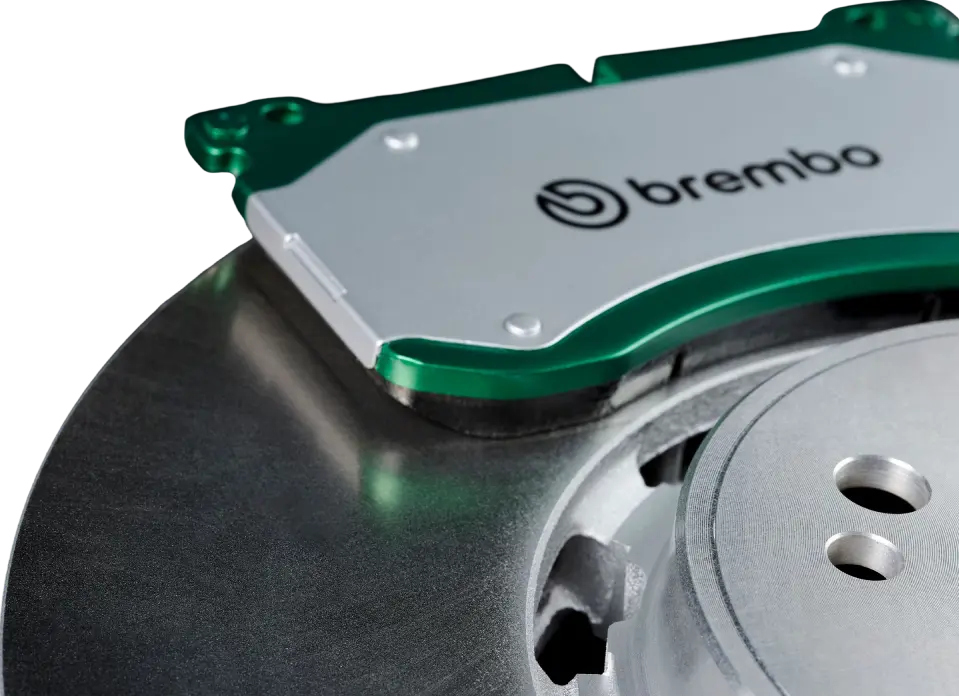
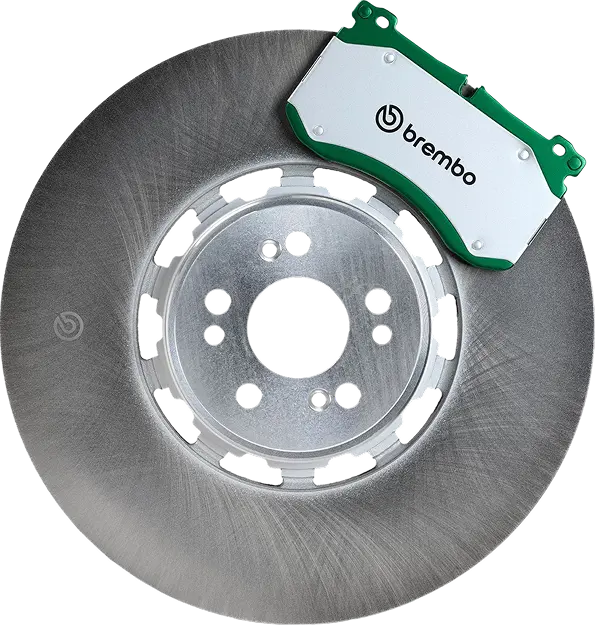
Greenance Plus combines a disc with an innovative nickel-free double-layer coating¹ applied using the Laser Metal Deposition (LMD) process, with pads specifically developed to work in synergy with the disc.
This advanced technology ensures:

Up to 80%² reduction in environmental impact
Up to 80%³ less surface wear compared with an equivalent uncoated cast iron disc
Up to 90%⁴ less particulate emissions
High resistance to corrosion
Greater durability of braking components
Reliable and consistent performance throughout the product’s entire life cycle
Easier maintenance, immediate control
Greenance Plus discs feature Easy Check technology, a visible marking on the braking surface that allows you to quickly check the disc’s wear level. When it is no longer visible, it is time to replace the disc.
A simple and intuitive solution that helps professionals and motorists keep the braking system in optimal condition throughout the product’s entire life cycle.
A versatile technology
Greenance Plus has been developed to adapt to different types of vehicles and braking system architectures: from internal combustion, hybrid and electric vehicles to passenger cars, SUVs and light commercial vehicles. The coating, in synergy with specially developed brake pads, significantly increases the disc’s service life while maintaining braking performance unchanged.
Moreover, the technology can be applied to different configurations, including integral, dual-cast, lightweight and floating discs, offering a versatile solution for multiple applications.
GREENANCE PLUS & GREENANCE KIT
Two solutions, one shared vision.
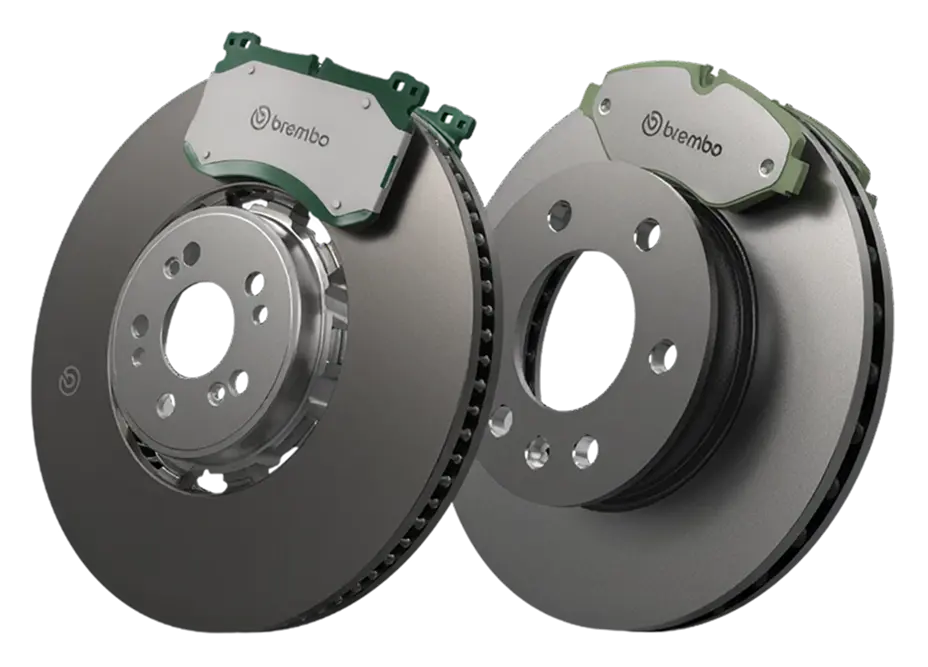
Greenance Plus Kit works alongside Greenance Kit to reduce environmental impact and extend the useful life of components.
¹ Patent application filed.
² Data valid through a life cycle assessment (LCA) applied by an independent third-party organisation.
³ Surface wear of equivalent cast iron disc measured by mass reduction by abrasion.
⁴ The data are based on Vehicle Emission tests performed on a Greenance brake according to the VDA/AK master procedure and the Vehicle Test Procedure.